
Dental Health
Bleeding Gums and Pyorrhea: Causes, Treatment and What Reverses It
Most people who notice blood when brushing assume it means they brushed too hard, and start brushing that area more gently. That instinct is exactly backwards — and it is why so many people in this region lose teeth that could have been saved.
Healthy gums do not bleed
That is the single most useful thing to know. Skin does not bleed when you wash it, and healthy gums do not bleed when brushed normally. Bleeding means inflammation, and inflammation means bacteria are sitting where they should not be.
How it starts
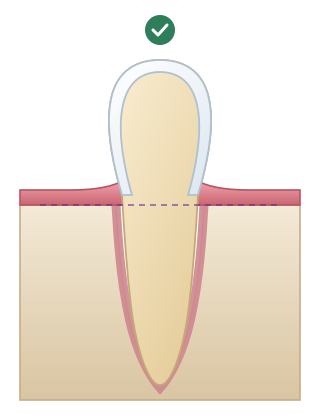
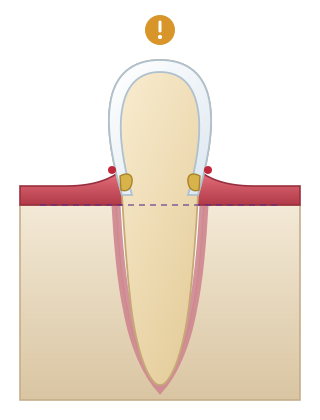
A sticky film of bacteria — plaque — forms constantly on teeth. Where it is not removed within a day or two, minerals in saliva harden it into tartar, which brushing can no longer shift. The rough surface traps more bacteria, and the gum responds with inflammation: red, puffy, bleeding.
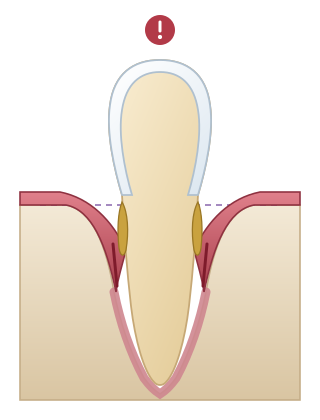
At this stage the condition is gingivitis, and it is entirely reversible. If it continues, inflammation spreads deeper and begins dissolving the bone that holds the teeth. That is periodontitis — what is commonly called pyorrhea — and the bone lost at this stage does not come back.
Signs beyond bleeding
- Red, swollen or tender gums
- Persistent bad breath or a bad taste
- Gums pulling away, so teeth look longer
- Sensitivity at the neck of the teeth
- New gaps opening between teeth
- Teeth feeling loose, or the bite changing
- Pus at the gum margin
What makes it worse
- Tobacco in any form — khaini, gutkha, paan and smoking all reduce blood flow to the gums, which masks bleeding while the damage accelerates underneath
- Uncontrolled diabetes — a two-way relationship covered in gum disease and overall health
- Crooked or crowded teeth — harder to clean properly
- Pregnancy — hormonal changes exaggerate the gum response to plaque
- Abrasive tooth powders — which wear the gum margin rather than cleaning it
Treatment
- Assessment — gum health and the depth of any pockets are checked; an X-ray shows how much bone remains.
- Scaling — ultrasonic cleaning removes tartar above and below the gum margin. Read why this does not weaken teeth: does scaling loosen your teeth?
- Deep cleaning — where pockets are deeper, root surfaces are cleaned across several visits.
- Home care plan — technique matters more than effort here.
- Review — gums are reassessed once inflammation has settled.
What to do at home
- Brush twice daily with a soft brush, angled into the gum margin, using small gentle circles
- Keep brushing the area that bleeds. It bleeds because it is inflamed; cleaning it properly is what settles it. Bleeding usually reduces within a week or two
- Clean between the teeth daily — brushing alone misses roughly a third of each tooth
- Stop tobacco in every form
- If you have diabetes, keep it controlled
- Have a professional cleaning every six months
Cost in Muzaffarpur
Consultation is ₹200 (free for patients in need and at camps), and cleaning is ₹300 to ₹600 per sitting depending on how much has built up. Advanced cases need more than one sitting, and you are told that at the outset.
Gums bleeding when you brush? It is the earliest and easiest stage to treat. Learn about cleaning and gum treatment or book an assessment at Janata Dental Clinic, Muzaffarpur — call 95726 63116.
Frequently Asked Questions
Why do my gums bleed when I brush?
In most cases bleeding is the earliest sign of gum inflammation caused by plaque and hardened tartar at the gum margin. Healthy gums do not bleed from normal brushing. The usual mistake is to brush that area less because it bleeds, which allows more plaque to accumulate and makes it worse.
Can pyorrhea be cured?
Early gum disease (gingivitis) is completely reversible with professional cleaning and good home care. Once it has progressed to periodontitis and bone has been lost, that bone does not grow back — but the disease can be halted and the remaining support preserved. This is why acting early matters so much.
Are bleeding gums serious?
They are a warning worth acting on. Gum disease is the leading cause of tooth loss in adults, and the inflammation is also linked with poorer blood sugar control in people with diabetes. Bleeding is the earliest and most treatable stage.