
Prevention
Does Scaling Loosen Your Teeth? India's Most Costly Dental Myth
"I've heard that getting a cleaning done loosens your teeth." We hear this every week, and it is the belief that causes more tooth loss in this region than almost any other — because it keeps people away for years, until the teeth they were trying to protect are beyond saving.
The direct answer
No. Scaling does not weaken or loosen teeth. It removes the hardened deposit that was loosening them. Any looseness noticed afterwards is not caused by the cleaning — it is the damage the tartar had already done, finally becoming visible.
Where the belief comes from
Picture a wall whose cracks have been filling with dirt for years. From the outside it looks solid. The day that dirt is cleared out, the cracks become obvious — but clearing the dirt did not create them.
Teeth behave the same way. Long-standing tartar fills the spaces between teeth and the gaps where gum has receded. When it is removed:
- The real spaces between teeth become visible
- How far the gums have receded becomes obvious
- Teeth that had already lost supporting bone can now be felt to move
- Exposed root surface causes temporary sensitivity
All of that is an account of what the tartar did — not what the cleaning did.
What tartar actually does
A sticky film of bacteria — plaque — forms on teeth after eating. If it is not brushed away within 24–72 hours, minerals in saliva harden it into tartar. Once formed, no brush, tooth powder, datun or home remedy will remove it; only instruments will.
Tartar's rough surface traps still more bacteria, which keep the gums inflamed, and that sustained inflammation gradually dissolves the bone holding the teeth. That process is periodontitis, and it is the leading cause of tooth loss in adults.
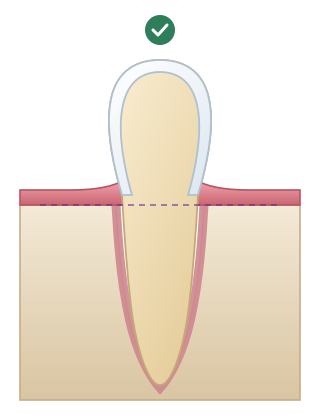
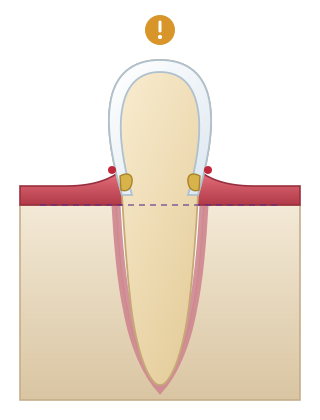
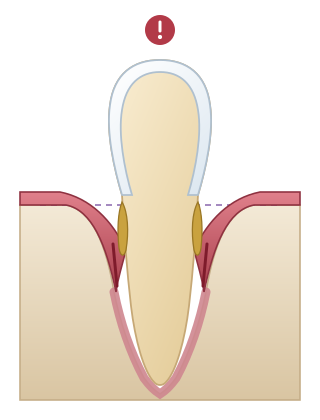
Note what stays constant across those three images: the dashed line. The bone drops away beneath it. That is the damage that happens silently, and timely cleaning is what prevents it.
What a cleaning involves
- Assessment of gum health and how much tartar has formed
- Ultrasonic scaling — a fine tip vibrates the hardened deposit away while water cools and flushes the area. It does not cut or grind the tooth
- Hand instruments where needed, for deposits below the gum margin
- Polishing — smooths the surface, removes stains and slows new plaque
Cost in Muzaffarpur
- Consultation: ₹200 — free for patients in need and at camps
- Cleaning (oral prophylaxis): ₹300 to ₹600 per sitting
The range reflects how much tartar has built up and how deep the cleaning must go. Where more than one sitting is needed, you are told at the outset. Our fees have not been revised since 2019.
The point worth remembering
Early gum disease is completely reversible. Once bone is lost, it does not come back. A cleaning once or twice a year is not treatment — it is prevention, and prevention is always cheaper and easier.
Bleeding gums or visible deposits on your teeth? Read more on gum disease and overall health, and book a cleaning at Janata Dental Clinic, Muzaffarpur — call 95726 63116.
Frequently Asked Questions
Does scaling wear away enamel?
No. An ultrasonic scaler uses vibration to break off hardened tartar; it does not grind the tooth. Enamel is the hardest tissue in the body and routine scaling does not damage it. Polishing afterwards leaves the surface smoother, so new plaque takes longer to build up.
Why are my teeth sensitive after a cleaning?
Because removing tartar exposes root surface that was previously covered by it. This sensitivity typically settles within a few days to a couple of weeks. A desensitising toothpaste helps during that period.
How often should teeth be cleaned professionally?
Every six months for most people. Those who use tobacco, paan or khaini, who smoke, who have diabetes, or who have had gum disease may need it more often.